






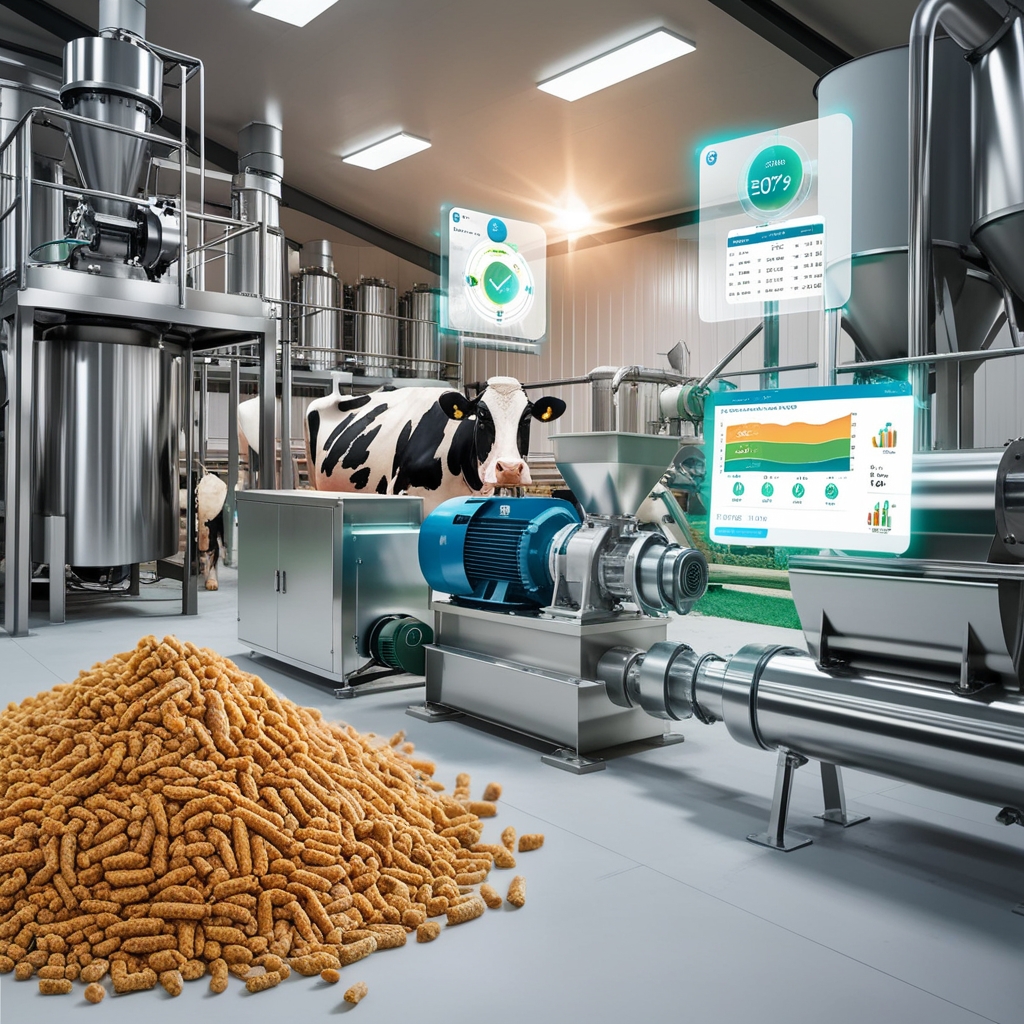
Introduction
In the livestock industry, the preparation and processing of high-quality feed is one of the most critical factors in increasing production efficiency, maintaining animal health, and reducing costs. With technological advancements, modern feed processing methods have undergone significant transformation. These methods not only improve feed digestibility, but also enhance nutritional value, reduce feed conversion ratio, and ultimately increase profitability for producers. This article examines the most important modern methods of livestock feed processing and preparation.
Importance of Feed Processing
Feed processing is highly important for several reasons, including improving nutrient digestibility, enhancing palatability, reducing anti-nutritional factors, and sterilizing feed. Proper processing enables animals to obtain more energy and protein from feed, directly contributing to increased milk, meat, and other animal product yields.
Thermal Processing Methods
One of the most common processing methods involves the use of heat. Techniques such as cooking, roasting, and fermentation have long been utilized. For example, cooking soybeans for at least 30 minutes destroys anti-nutritional factors such as trypsin inhibitors and increases protein digestibility. Roasting grains at temperatures between 110 and 168°C reduces moisture content and improves feed shelf life.
Extrusion and Expansion
Extrusion and expansion are advanced thermal-pressure processing methods. In these techniques, feed materials are exposed to high temperatures and controlled pressure for a short period. This process eliminates anti-nutritional factors, improves amino acid availability, and increases metabolizable energy. These methods produce feed with uniform texture and very high digestibility.
Micronization
Micronization is an innovative method that uses infrared radiation to generate heat within grains. This heat destroys anti-nutritional factors and breaks down fat cells. In soybeans, for example, this method releases more energy and significantly improves digestibility.
Flaking
In the flaking process, grains are steamed and then passed between rollers to form flakes. This softens the grain structure and increases digestibility. Flaking is particularly beneficial for cereal grains such as corn and wheat, ultimately improving feed efficiency in livestock.
Pelleting
Pelleting is one of the most widely used physical feed processing methods. In this process, powdered feed is mixed and then compressed under heat and pressure into pellets. Pelleting offers numerous advantages, including reduced feed wastage, increased energy density, elimination of pathogens, and improved palatability. It also reduces feeding time and energy expenditure for consumption, leading to improved growth and production.
Disadvantages and Challenges of Pelleting
Despite its advantages, pelleting has some drawbacks, including high production costs, increased risk of metabolic disorders such as ascites and tibial dyschondroplasia, destruction of heat-sensitive nutrients, and increased water intake by animals. Therefore, precise process management is essential.
Factors Affecting Pellet Quality
Pellet quality depends on several factors including diet formulation, particle size, pelleting conditions (temperature and moisture), die characteristics, and cooling and drying methods. Pellet quality is measured using the Pellet Durability Index (PDI), which evaluates resistance to breakage and dust formation.
Processing Management Based on Animal Type
The choice of processing method depends on the animal species and its nutritional requirements. For poultry, pellets of 2–4 mm are commonly used, whereas pellets of 6–10 mm diameter are suitable for cattle and sheep. Pellet size and composition must also be adjusted according to different growth stages.
Livestock Feed Production Line
A feed production line includes equipment such as grinders, mixers, pellet mills, and coolers. Modern systems operate fully automatically with precise control of temperature, moisture, and processing time, ensuring uniform quality and high efficiency.
Importance of Particle Size
Particle size plays a key role in final feed quality. Proper grinding increases the contact surface between digestive enzymes and feed, improving digestion. Optimal particle size for ruminants is approximately 1–2 mm, while smaller sizes are required for poultry.
Hydroponic Cultivation Method
Hydroponics is a modern method for producing fresh forage without soil. Grains such as barley and alfalfa are grown in a controlled environment. This method produces high-quality, pesticide-free forage with low water consumption, though challenges such as mold growth and reduced dry matter may occur.
Use of Conditioner Systems
Conditioners in feed production lines expose dry raw materials to warm and moist conditions before milling. This allows moisture penetration and improves processing quality, creating more flexible material for pelleting and reducing waste.
Role of the Mixer
The mixer uniformly blends raw materials, ensuring consistent nutrient distribution throughout the feed. These machines can combine dry and wet ingredients to produce balanced feed for various livestock species.
Importance of Packaging and Storage
Proper packaging prevents spoilage and quality loss. Semi-automatic or fully automatic bagging machines ensure hygienic and accurate packaging. Storage in cool and dry warehouses is essential for maintaining feed quality.
Nutritional Management for Increased Efficiency
Nutritional management involves providing balanced rations tailored to animal requirements. The use of concentrates and supplements containing protein, vitamins, and minerals improves feed efficiency. Monitoring dry matter intake and adjusting rations based on production stage is crucial.
Environmental Effects on Feed Intake
Environmental factors such as heat stress can reduce feed intake. Cooling systems such as fans and misting devices are recommended. Providing adequate feeding space (at least 70 cm per cow) allows weaker animals sufficient access to feed.
What is Smart Monitoring?
Modern smart systems and livestock management applications enable precise monitoring of feed intake and animal performance. These systems collect and analyze data to optimize ration formulation and improve efficiency. Improper transport, packaging defects, and poor storage management can lead to feed losses. Using conveyors and elevators for safe transfer and minimizing feed leftovers help reduce waste.
Future of Livestock Feed Processing
The future of feed processing is moving toward greater use of digital technologies, natural additives, and sustainable methods. Modern processing techniques play a key role in improving productivity and profitability. Selecting appropriate methods depends on animal type, economic conditions, and available facilities. A combination of physical and thermal processing methods along with natural additives can yield optimal results.

