





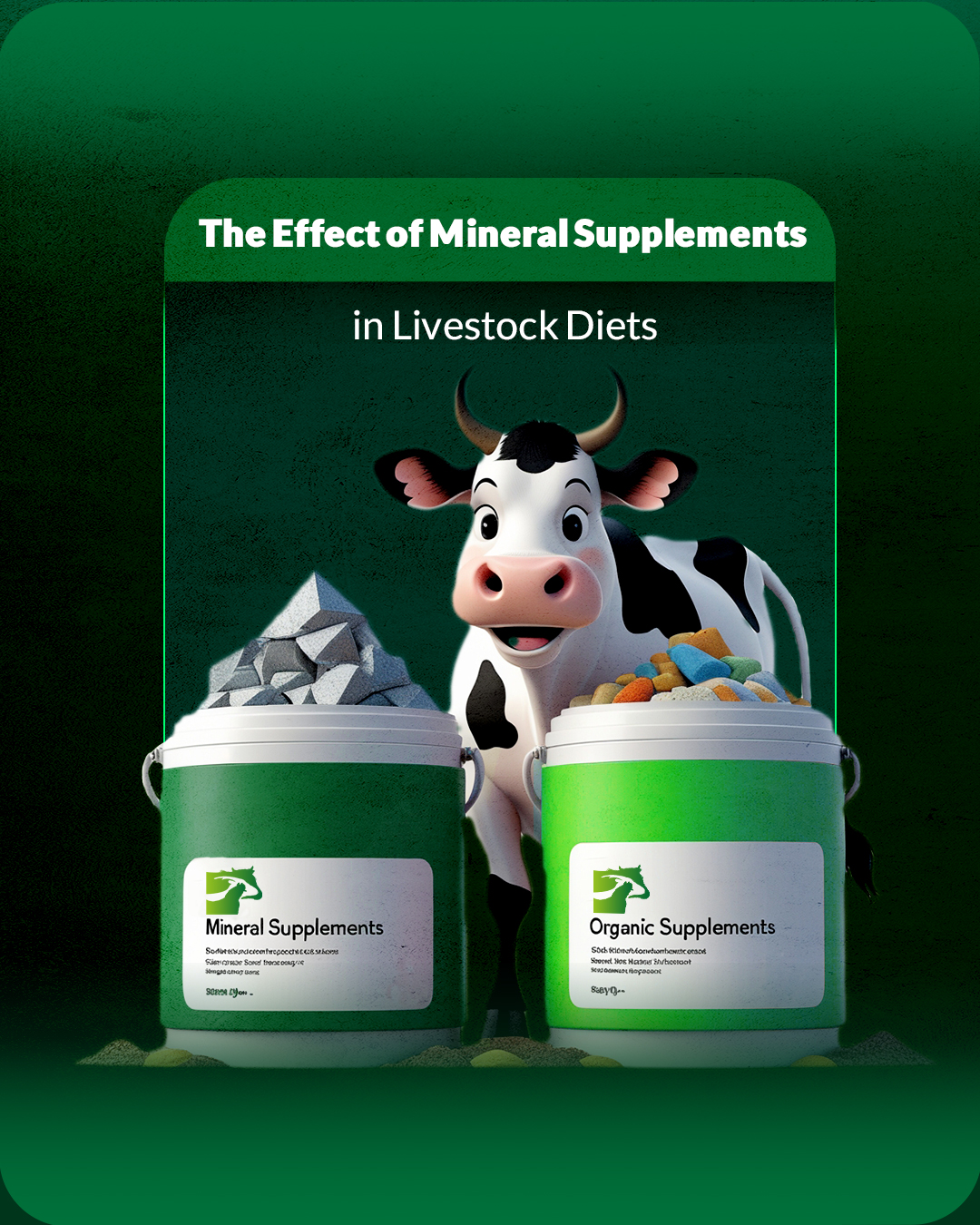
The Effects of Organic and Inorganic Mineral Supplements and Their Comparative Efficacy in Livestock Diets
Minerals play a critical role in livestock health, growth, reproduction, and immune function. In animal nutrition, these elements are supplied in two primary forms: organic (chelated) and inorganic (mineral salts). Research indicates that organic minerals offer significant advantages over inorganic sources due to their higher bioavailability, improved absorption, and reduced antagonistic interactions. This article examines the effects and comparative performance of these two mineral forms in livestock diets.
Differences Between Organic and Inorganic Mineral Supplements
Inorganic mineral supplements typically include sulfate, oxide, or chloride salts of elements such as zinc, copper, manganese, and selenium. In contrast, organic minerals are formed by binding these elements to organic ligands such as amino acids, peptides, or proteins, creating chelates or complexes.
This organic structure protects the mineral from undesirable interactions in the digestive tract and enhances its absorption efficiency.
1. Bioavailability and Absorption Mechanisms
Organic minerals demonstrate greater stability in the acidic environment of the stomach and are absorbed through amino acid transport pathways in the intestine. Studies show that absorption rates of organic zinc and copper can be up to 50% higher than their inorganic counterparts.
Additionally, organic forms are less likely to compete with other minerals in the gut, enabling more efficient uptake and utilization.
2. Impact on Growth Performance
The inclusion of organic mineral supplements in calf starter diets has been associated with increased average daily gain (ADG) and improved feed conversion efficiency.
For example, calves receiving organic forms of copper, manganese, zinc, and selenium showed an increase of 66 grams in daily weight gain and a 44.6% improvement in feed efficiency. Similar positive effects have been reported in ruminants and poultry.
3. Effects on Milk Production and Composition
In dairy cows, replacing inorganic mineral sources with organic forms has resulted in higher milk yield and improved milk composition.
Research indicates that organic mineral supplementation can increase milk production by up to 11%, while milk fat and protein percentages may rise by up to 7%.
4. Role in Immune Function and Animal Health
Both organic and inorganic minerals are essential for immune competence, cellular metabolism, and organ function. However, organic minerals generally exhibit superior efficacy due to enhanced bioavailability and reduced mineral antagonism.
Organic supplementation has been associated with:
-
Strengthened immune response
-
Reduced incidence of mastitis
-
Improved hoof integrity and skin health
-
Lower somatic cell counts in milk (notably with organic zinc)
5. Reproductive Performance and Fertility
Organic mineral supplementation has been shown to reduce days open and decrease services per conception in dairy cattle.
Supplementing dairy cows with organic zinc and copper improves conception rates and overall reproductive efficiency, largely due to the role of trace minerals in hormone synthesis and enzymatic activity related to reproduction.
6. Reduced Environmental Mineral Excretion
Due to improved absorption, organic minerals lead to lower mineral excretion in manure. Studies demonstrate reductions in fecal excretion of:
-
Manganese by 25%
-
Zinc by 16%
-
Copper by 22%
This not only minimizes environmental contamination but also enhances economic efficiency by reducing mineral waste.
7. Economic Considerations and Practical Recommendations
Although organic mineral supplements are generally more expensive per unit, their higher bioavailability allows for lower inclusion rates and improved performance outcomes. Over time, this translates into better cost-effectiveness.
Furthermore, the growing demand for organic and sustainably produced animal products makes organic mineral supplementation increasingly attractive in modern livestock systems.
8. Application During Stress Conditions
Organic minerals are particularly beneficial during stress periods such as transportation, weaning, or heat stress.
Organic chromium (e.g., chromium yeast) has demonstrated positive effects on growth performance and stress mitigation in calves by improving glucose metabolism and immune response.
9. Interaction with Other Nutrients
Mineral antagonisms (e.g., between copper, iron, and sulfur) can reduce absorption efficiency. Organic mineral forms are less susceptible to such interactions, allowing more consistent and optimal uptake.
Their use may also reduce the critical sensitivity to precise calcium-to-phosphorus ratios in certain feeding programs.
10. Nutritional Considerations in Ruminants
In ruminants, inorganic minerals may be altered by rumen microbial activity, potentially reducing their availability. Organic minerals exhibit greater rumen stability and improved intestinal absorption—particularly for copper and zinc.
11. Effects on Animal Product Quality
Organic mineral supplementation can enhance the quality of meat and eggs.
In poultry, organic manganese and zinc improve eggshell strength and reduce skeletal abnormalities. In beef cattle, these supplements contribute to improved meat color stability and shelf life.
12. Limitations and Challenges
Despite their advantages, organic minerals have certain limitations, including higher upfront costs and variability depending on ligand type and production conditions. Proper formulation and professional nutritional guidance are essential for maximizing their benefits.
Conclusion
Replacing inorganic mineral supplements with organic forms can significantly improve growth performance, milk production, immune competence, reproductive efficiency, and environmental sustainability.
Although organic minerals are more expensive initially, their superior bioavailability and performance benefits make them a cost-effective long-term investment.
Livestock producers are encouraged to consult qualified animal nutrition specialists to optimize mineral supplementation strategies based on herd requirements and production goals.
For professional consultation on livestock nutrition and the use of organic mineral supplements, please contact the experts at Pishro Atiyeh Dam.

